



NEWS&EVENTS
Home > News&Events > Company news > How should a tilting crucible copper-melting furnace be operated and maintained after shutdown?
Proper operation and maintenance following the shutdown of a tilting crucible copper-melting furnace are critical to ensuring equipment safety and extending its service life. The following are the key points:
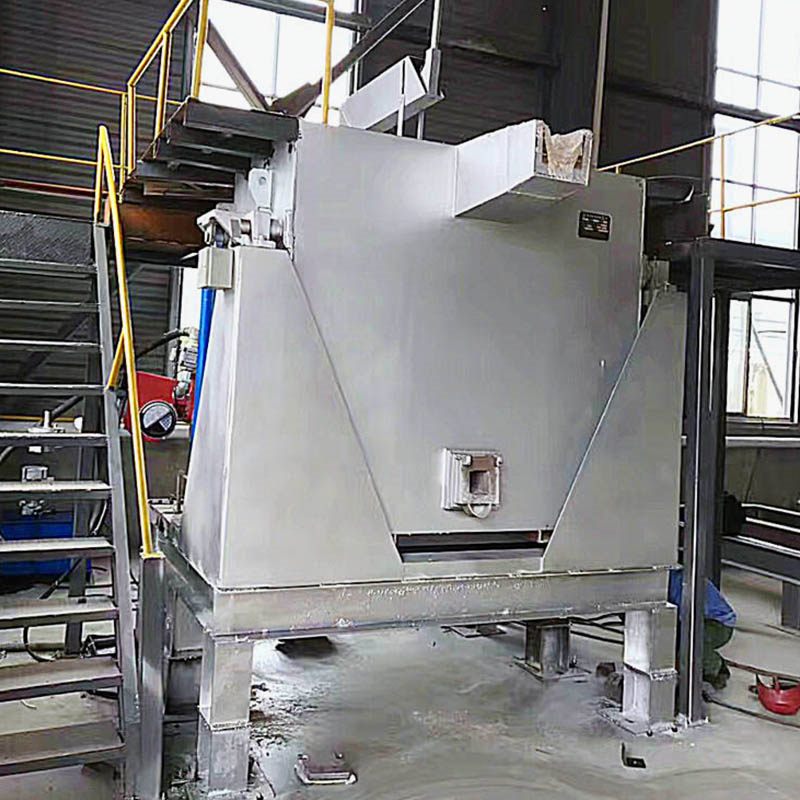
I. Operations on the Day of Shutdown (To be completed immediately)
Upon completion of work, immediately and thoroughly pour out any residual molten copper remaining in the crucible, then clean the crucible to prevent the copper from solidifying and cracking the crucible or fusing to its inner walls. Subsequently, return the tilting mechanism, furnace lid, and other components to their non-working positions. Then, sequentially shut down the blower (if applicable) and disconnect the main power supply—this sequence must not be reversed, as it facilitates heat dissipation.
II. Site Cleanup (To be performed after the furnace has cooled to room temperature)
Clean up copper scraps, slag, and dust from the area surrounding the furnace body and the immediate workspace. Pay particular attention to moving parts—such as the tilting pivot shaft and the crucible rim—to prevent debris from causing jamming.
III. Periodic Inspection of Key Components
Crucible: Inspect for any expanding cracks or through-cracks. Minor cracks may be repaired; however, severe cracks necessitate immediate replacement to prevent copper leakage and the risk of explosion.
Furnace Body: Check the refractory lining for spalling or deformation. Inspect the tilting hydraulic cylinder or connecting rods for leaks, and check the furnace shell for signs of overheating or discoloration.
IV. Electrical and Heating System Maintenance (To be performed with power disconnected)
Use a vacuum cleaner in conjunction with a soft-bristled brush to remove accumulated dust from the frequency converter, contactors, and heating element terminals located within the control cabinet; this prevents insulation degradation caused by moisture absorption. For resistance furnaces, additionally inspect the heating elements (resistance wires) for signs of oxidation-induced thinning or burnout.
V. Specialized Maintenance for Different Furnace Types
Gas-fired Furnaces: Periodically clean carbon deposits from the combustion chamber to prevent alterations in flame shape, a decline in thermal efficiency, or flashback.
Induction Furnaces: Focus maintenance efforts on the cooling system. Verify that the water-cooling cables, induction coils, and thyristor cooling channels remain unobstructed to prevent scale buildup or blockages that could lead to coil overheating and burnout. It is recommended to flush the cooling channels with a descaling agent on a quarterly basis.
All the operations outlined above require the completion of a maintenance checklist; adhering to these procedures can reduce the equipment failure rate by over 60%. By following these steps, you can significantly extend the service life of core components—such as the crucible, induction coil, and burner—thereby ensuring operational safety.