



NEWS&EVENTS
Home > News&Events > Company news > Excessive surface particles and frequent nodulation on copper cathode during copper electrorefining?
The occurrence of excessive surface particles and frequent nodule formation on copper electrolytic cathodes is primarily linked to the following five process parameters:
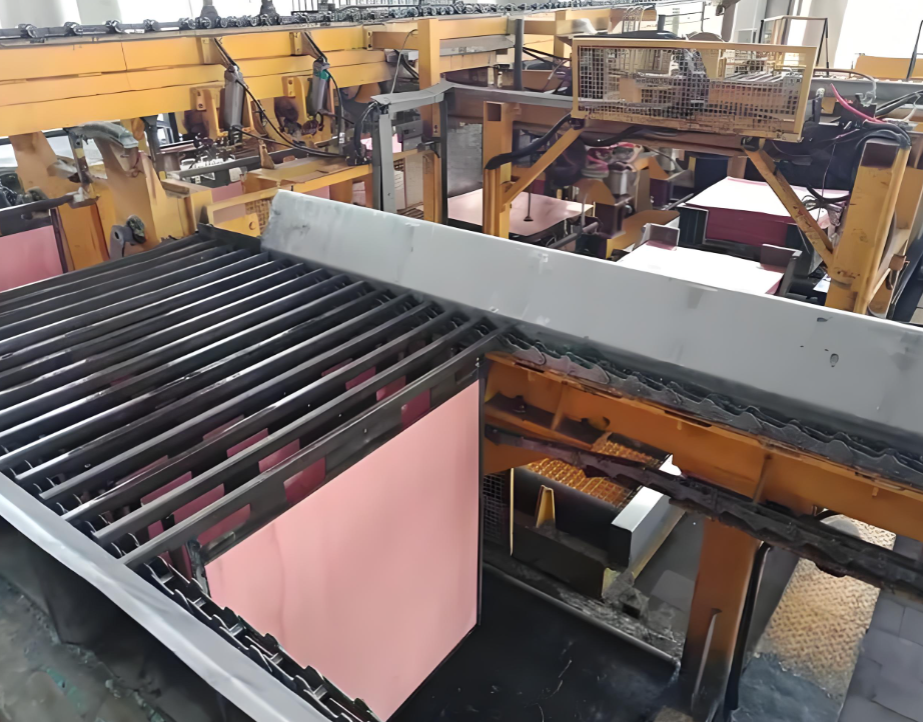
1. Improper Additive Ratios
Glue, thiourea, and chloride ions are the core components controlling deposition quality. Insufficient or excessive amounts of glue result in a coarse grain structure; chloride ion concentration should ideally be maintained between 0.03 and 0.035 g/L, as deviations disrupt the dense crystalline structure; similarly, an imbalance in thiourea concentration can trigger nodule formation. A disproportionate ratio among these three additives is a common underlying cause.
2. Excessive Suspended Solids Content
Suspended solids within the electrolyte—such as copper powder and anode slime—adhere to the cathode surface, creating localized "hot spots" where copper deposition is accelerated and growth occurs rapidly. To mitigate this, it is necessary to suppress the generation of Cu? ions, optimize electrolyte circulation, and enhance filtration efficiency.
3. Uneven Current Density Distribution
The risk of nodule formation increases significantly when the overall current density exceeds 300 A/m2. Factors such as rough cathode plates, uneven anodes, or inconsistent electrode spacing lead to localized current concentration; consequently, nodules tend to form at the electrolyte inlet/outlet points, along the edges, and at the bottom of the cathode plates, thereby initiating a detrimental feedback loop.
4. Poor Control of Temperature and Circulation Flow Rate
The electrolyte temperature should ideally be maintained within the range of 61 ± 2°C. The circulation flow rate requires careful balancing (e.g., at 30 L/min); insufficient flow leads to concentration polarization, while excessive flow can dislodge and resuspend settled anode slime.
5. Deviations in Electrolyte Composition
The copper ion concentration should ideally be maintained between 43 and 45 g/L; concentrations that are too low result in "ion starvation" at the cathode surface, while concentrations that are too high increase the electrolyte's viscosity. The sulfuric acid concentration should be approximately 180 g/L; deviations in acidity negatively impact both the electrolyte's electrical conductivity and the performance of the additives.
Recommendations: Priority should be given to verifying the additive ratios and optimizing electrolyte purification (specifically, reducing suspended solids). Concurrently, ensure that the current density, temperature, circulation flow rate, and copper/acid concentrations remain within their optimal operating ranges. If the issue persists, a comprehensive investigation into the quality of the anodes and starter sheets, as well as the performance of the electrolyte purification system, is required.