



NEWS&EVENTS
Home > News&Events > Company news > Why should antimony slurry electrolytic cells use corrosion-resistant materials?
Electrowinning is a key step in the hydrometallurgical process of antimony production, and this process is typically conducted in a highly acidic environment. Common electrolyte systems include hydrochloric acid (HCl) or hydrofluorosilicic acid (H?SiF?), both of which are extremely chemically corrosive. Therefore, the electrolytic cell and electrodes must be constructed of specific corrosion-resistant materials. This is primarily due to three key factors: equipment durability, process stability, and product purity.
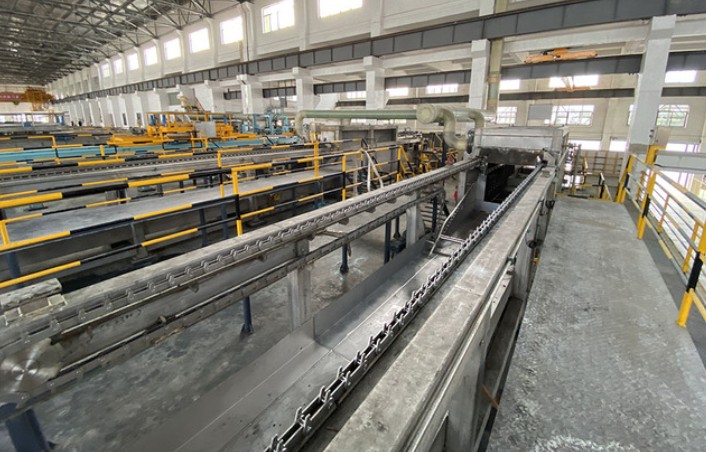
First, strongly acidic electrolytes are highly corrosive to common metals. For example, hydrochloric acid, at high temperatures and concentrations, can rapidly corrode common structural materials such as carbon steel and stainless steel, leading to cell perforations, leaks, and even structural failure. This not only disrupts production, increases maintenance frequency and costs, but also poses potential safety risks.
Second, the use of corrosion-resistant materials directly impacts the purity of the antimony product. If the electrolytic cell or electrode materials corrode, metal ions (such as iron, nickel, and chromium) will leach into the electrolyte, ultimately mixing with antimony metal during cathode deposition. These impurities can lower the quality of the final product, affecting key properties like conductivity and hardness. In severe cases, they can even cause the product to fail to meet industry standards. For example, high-purity antimony is widely used in the semiconductor and electronics industries, where impurity levels are extremely stringent. Therefore, selecting highly inert materials is crucial for preventing impurity contamination at its source.
Furthermore, the stability of the electrolysis process is closely related to the corrosion resistance of the material. If the electrode surface becomes rough or locally damaged due to corrosion, it will lead to uneven current distribution and increased polarization, which in turn affects electrolysis efficiency and the quality of antimony precipitation. Corrosion-resistant materials can maintain a smooth and stable electrode surface over a long period of time, ensuring that the electrolysis reaction proceeds under controllable and efficient conditions.
In summary, in the antimony slurry electrolysis process, the selection of corrosion-resistant materials for the tank and electrodes is a key measure to ensure long-term equipment operation, maintain high-purity product output, and optimize process stability. This requirement highlights the profound connection between materials science and metallurgical engineering and is an important manifestation of the efficient, green, and high-quality development of modern hydrometallurgical technology.