Ring formation usually refers to the material sticking together in the high temperature zone, which hinders the operation of the equipment. This is a common problem in the operation of the rotary kiln. Preventing the ring formation phenomenon in the rotary kiln requires comprehensive control from multiple aspects such as raw material characteristics, operating parameters, equipment design and maintenance. The following are some key preventive measures:
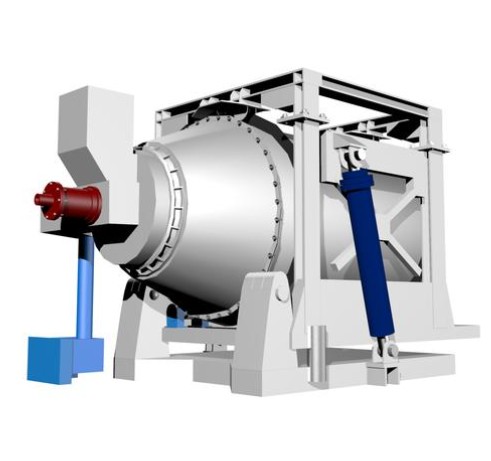
I. Raw material control
1. Avoid excessive content of alkaline substances (such as K?O, Na?O, Cl?, S) in the raw materials. These substances are prone to form low-melting point compounds at high temperatures and promote ring formation.
Control the content of volatile components (such as chlorides and sulfides) in the raw materials to reduce the condensation and deposition of gaseous substances.
2. Ensure that the raw material particles are uniform, avoid too fine powder (easy to fly and stick) or too large blocks (uneven heat transfer).
3. Add high melting point substances (such as bauxite and silica sand) to increase the softening temperature of the material.
Use mineralizers (such as fluorite) to promote the reaction of materials at low temperatures and reduce the residence time in the high temperature zone.
2. Optimization of operating parameters
1. Avoid local overheating (especially near the burner), the temperature of the high temperature zone should be 50~100°C lower than the melting temperature of the material.
Use multi-stage temperature control to reduce the heat load in the high temperature zone.
2. Appropriately increase the speed (such as 2~5 RPM) to enhance material tumbling and prevent static accumulation.
Adjust the cylinder inclination (usually 2~5°), control the material residence time, and avoid excessive sintering.
3. Control the oxygen concentration to avoid excessive reducing atmosphere (easy to generate low melting point FeO instead of Fe?O?). Reduce the alkaline substances in the fuel ash (such as choosing low ash gas instead of coal).
3. Process monitoring and maintenance
1. Use infrared thermal imagers or thermocouples to monitor the surface temperature distribution of the cylinder in real time, and adjust it in time if local overheating is found. Install cameras or acoustic wave detectors to monitor the flow status of materials.
2. Manually remove the rings when shutting down to avoid accumulation of blocks. Use high-pressure water guns or mechanical devices to clean the inner wall adhesive.
3. Establish a ring formation warning model based on historical data (such as judging the ring formation risk through temperature, pressure, and current fluctuations).
The above measures can significantly reduce the probability of ring formation. In practical applications, the solution should be flexibly adjusted based on specific processes (such as cement calcination, metallurgical roasting) and material characteristics. If serious ring formation has occurred, the machine should be shut down to avoid damage to the rotary kiln!