The raw materials for lead ore smelting are mostly lead sulfide concentrate, and a small amount is lead-zinc oxide ore, in which the valuable metals can almost all be recovered during the smelting process.Electrolytic equipment plays an important role in the smelting process.
At present, the commonly used lead smelting methods in the world are crude smelting and refined smelting, and crude smelting has two methods: pyrometallurgy and hydrometallurgy. At present, pyrometallurgy is mainly carried out through "sintering-roasting-blast furnace", and its output accounts for about 85-90% of the total lead output; followed by reaction smelting method, its equipment can be hearth furnace, short kiln, electric furnace or vortex furnace, etc., while precipitation method is rarely used.
Refining is divided into pyrometallurgy and electrolytic refining. The pyrometallurgy is refined into refined lead after removing copper (first remove copper by melting or condensation, then add sulfur to remove copper deeply), removing tellurium (adding caustic soda), removing arsenic, antimony and tin (oxidation method or alkaline refining method: the principle is based on the oxidation of arsenic, antimony and tin into high-valent oxides → into soft lead under the action of strong oxidant NaNO3 at 450℃), removing silver (adding zinc to recover gold and silver), removing zinc (lead calcium) and removing bismuth. This process has the characteristics of simple equipment, low investment, short construction period, small equipment investment and low cost. It is especially suitable for processing crude lead with low bismuth content; but it has the disadvantages of long process flow, low production efficiency and bad production environment. The raw material for electrolysis is generally crude lead. Crude lead is first refined by pyrometallurgy to remove copper and tin, adjust the antimony content, cast into anode plates, and electrolyzed with aqueous solutions of silicofluoric acid and lead silicofluoride. After the copper slag is treated, the crude lead returns to the electrolysis process, and the matte enters the next process to recover copper. The precipitated lead is oxidized and refined to remove impurities such as arsenic, antimony, and tin, and then cast into product lead ingots. The electrolytic anode mud is sent to the next process to further recover the valuable metals therein.
The raw material used for electrolysis is usually crude lead. Fire refining is used to remove copper and tin, and after adjusting the antimony content, it is made into anode plates, and then electrolyzed with silicic acid-lead silicic acid aqueous solution. After the copper slag is treated, the crude lead returns to the electrolysis process, and the matte enters the next process to recover copper. The precipitated lead is oxidized and refined to remove impurities such as arsenic, antimony and tin, and is made into finished lead ingots. The electrolytic anode mud is sent to the next process to further recover the useful metals therein.
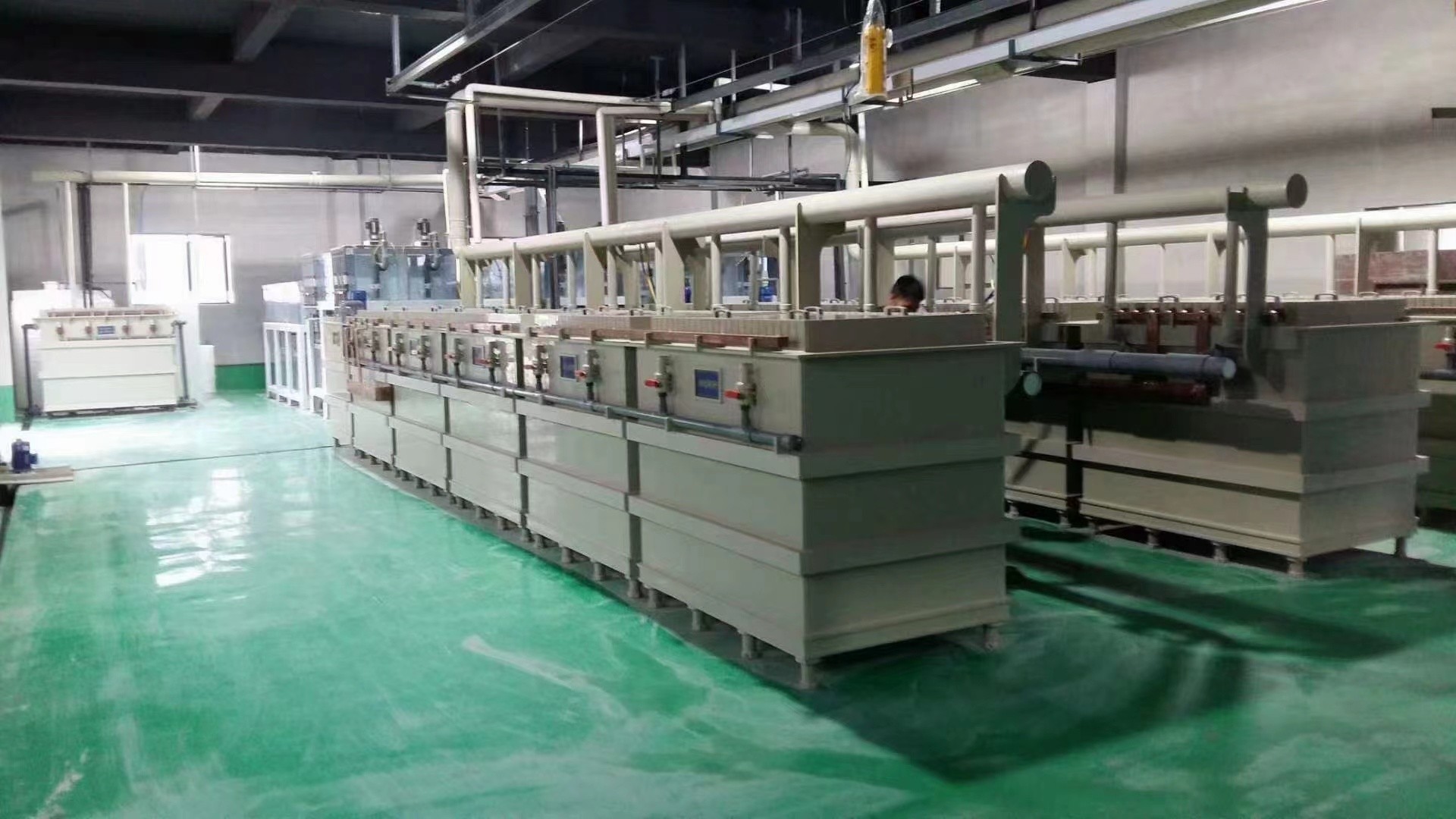
The types of energy used in the lead smelting process include natural gas, electricity, coke, etc. The types of energy used in the lead smelting process: mainly natural gas (coal gas), electricity, steam and energy-consuming working fluids (new water), among which refining gas and electrolysis, ingot casting, auxiliary electricity, etc.
Electrolytic equipment refining in lead ore smelting can improve efficiency and purity.